
Winterizing Your Garage Door Before Santa Barbara's Rainy Season
If your garage door closes flush against the slab with no daylight showing underneath, you're in decent shape for winter. The exceptions: doors near the coast with any visible rust, wood or wood-composite doors that have swelled or stuck in past rainy seasons, and any door where the bottom seal has gone flat, cracked, or pulled away from the track. Those three situations are worth fixing before the first real storm rolls in, not after.
Start With the Seal, Not the Spring
Santa Barbara doesn't get snow or ice, but it does get hard, sideways winter rain, especially where wind funnels down from the foothills toward Montecito, Hope Ranch, and the Goleta foothills. A worn bottom seal is the single most common reason garages flood during a storm. Look at the rubber gasket along the bottom of the door: if it's cracked, flattened on one side, or has gaps where it meets the slab, water will find its way under it. Replacement seals are inexpensive and most homeowners can swap one out with basic tools in under an hour. While you're down there, check the vinyl or brush weatherstripping along the sides and top of the door frame. Years of sun exposure during our dry summers makes this stripping brittle, and it often cracks right before the rain starts.
Salt Air Doesn't Take a Winter Break
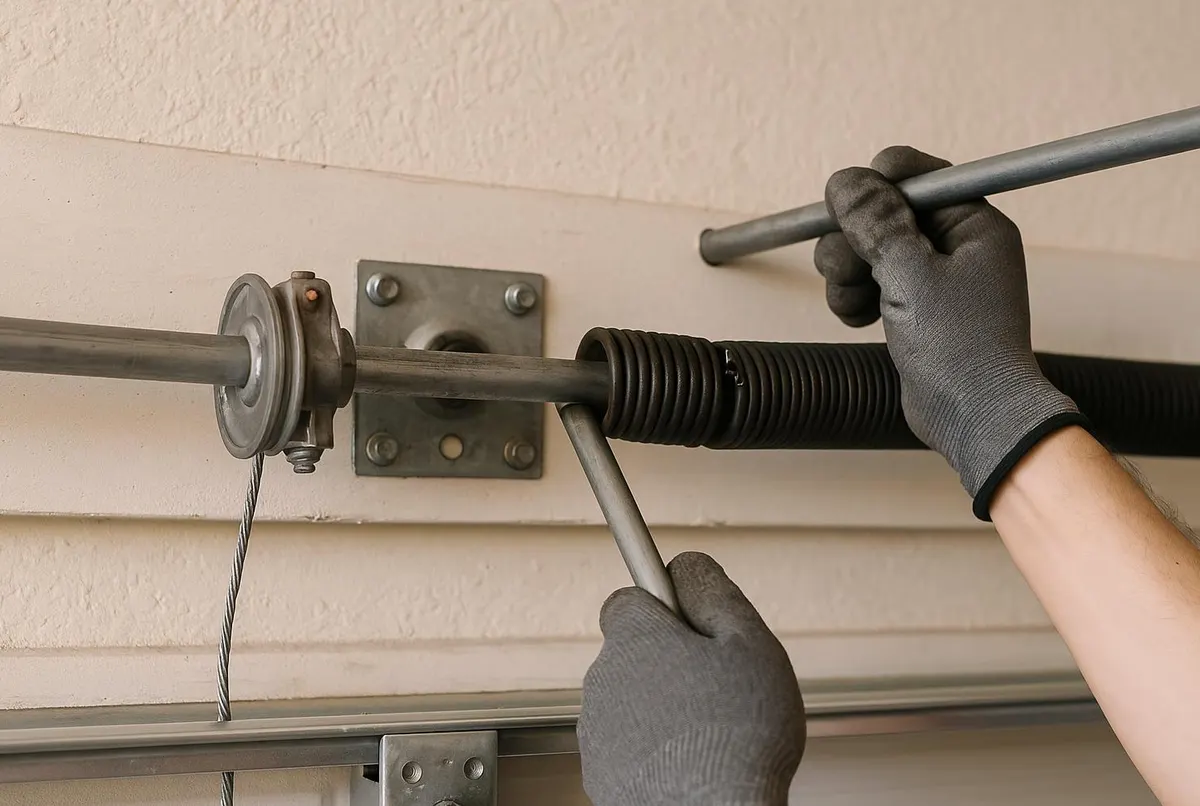
If you're anywhere near the coast — Summerland, Carpinteria, the Mesa, lower Montecito — salt air is working on your hardware year-round, and winter rain accelerates it by keeping metal surfaces damp longer between dry spells. Walk your hinges, rollers, and track with a flashlight. Surface rust on hinges is cosmetic and can usually be wiped down and lightly oiled. Rust that's flaking off bolts, rollers, or the track itself is a different story — it weakens the metal and can cause a roller to bind or a hinge to fail under load. A light coat of garage-door-specific lubricant (not WD-40, which attracts dust) on hinges, rollers, and the torsion spring will help carry hardware through the wet months.
Rain Changes How Your Door Moves
Wood and composite-wood garage doors absorb moisture from humid winter air and can swell slightly, which shows up as a door that's suddenly harder to close, scrapes against the frame, or needs more force from the opener than it used to. This isn't usually a sign the door is failing — it's the material responding to the season. Painting or resealing exposed wood edges before the rains start helps limit how much moisture gets in. If your door is steel, swelling isn't the issue, but tracks can shift slightly as rain saturates the ground around older foundations, especially on properties with older concrete aprons. If you notice uneven gaps along the sides of the door that weren't there during the dry months, the track alignment is worth checking before it gets worse.
Check the Opener's Safety Eyes and Weather Exposure
The two small photo-eye sensors near the bottom of the track are easy to forget, but they're sensitive to both grime and moisture. After our dusty late-summer and fall months, they often have a film on the lenses that gets worse once rain starts splashing dirt back up onto them. A sensor with a dirty or fogged lens will cause the door to reverse randomly or refuse to close at all — a problem a lot of people mistake for opener failure. Wipe both lenses with a soft, dry cloth and make sure neither sensor has drifted out of alignment from a bumped ladder or stored item nearby.
Don't Forget the Quake Bracing
Many Santa Barbara-area garages have been retrofitted with reinforced bracing or steel bracing kits on the door itself as part of broader seismic retrofit work. These components don't need winter-specific attention, but they're often overlooked during a general inspection. If your garage has visible bracing hardware, give it the same rust check you're giving the rest of the hardware — a compromised brace is a bigger structural concern than a squeaky hinge, and corrosion can hide in bolt threads where it's not obvious at a glance.
A Short Pre-Winter Checklist
- Inspect and, if needed, replace the bottom door seal and side weatherstripping
- Lubricate hinges, rollers, and springs with a silicone or lithium-based garage door lubricant
- Check all hardware, braces, and tracks for rust, especially within a mile or two of the coast
- Clean the opener's photo-eye sensors and confirm alignment
- Watch for new gaps, scrapes, or sticking as humidity rises, particularly on wood doors
- Test the auto-reverse safety feature by placing a block in the door's path
When to Call Santa Barbara Garage Door Service
If you've gone through this list and still have a door that sticks, a seal that won't sit flush no matter how you adjust it, or hardware with rust you're not comfortable assessing yourself, that's when it makes sense to bring in a technician. Our Garage Door Maintenance visits cover a full hardware and track inspection, lubrication, and seal replacement in one trip, which is the most efficient way to handle pre-winter prep. If we find a spring that's showing wear under the extra humidity-driven strain, we'll walk you through Spring Replacement options rather than let it become an emergency mid-storm.
If your garage door needs attention before the rain really sets in, call Santa Barbara Garage Door Service — we serve Santa Barbara, Goleta, Montecito, Carpinteria, Summerland, Isla Vista, Hope Ranch, and Ventura, and we're happy to get your door storm-ready this season.