
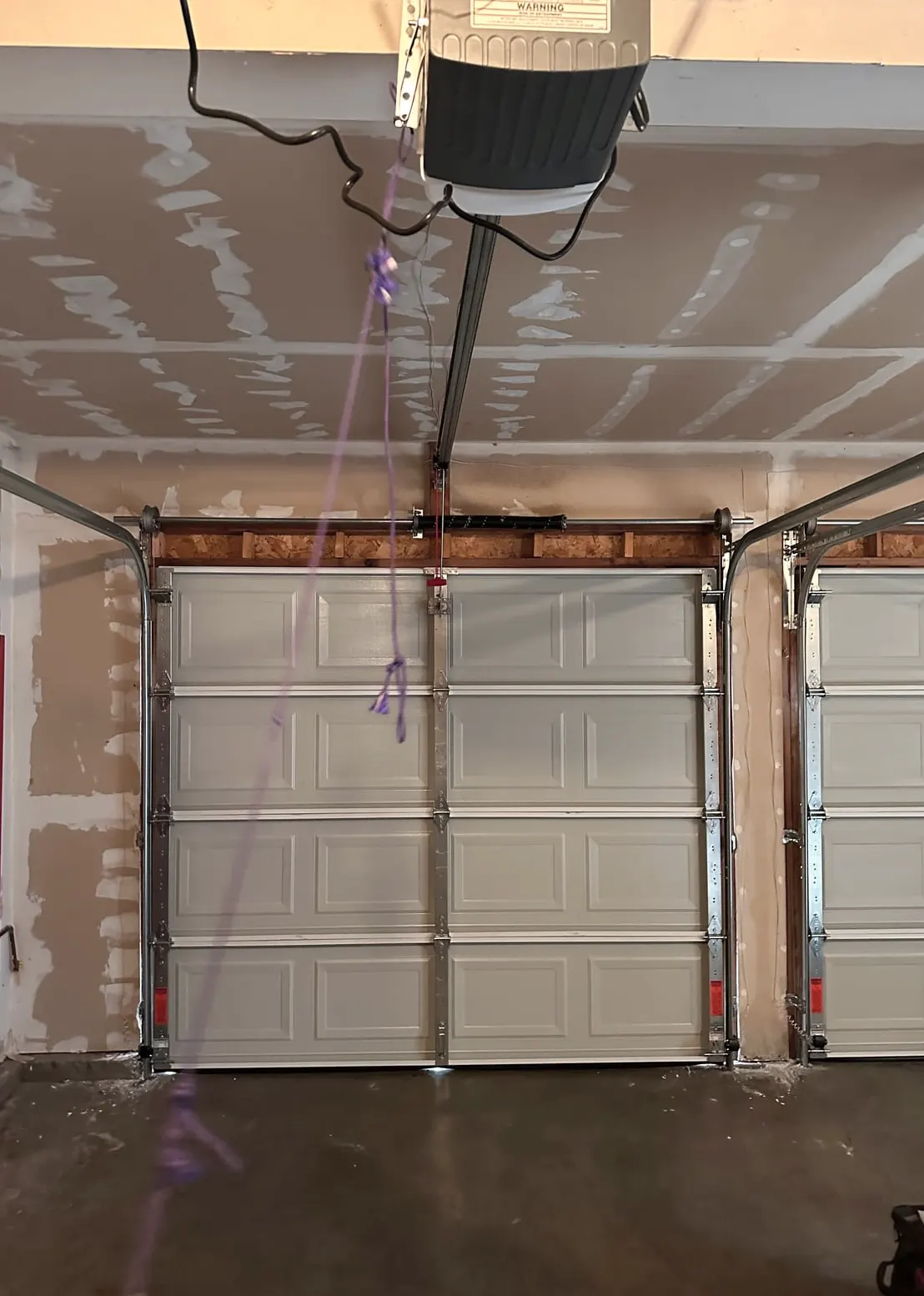
The rain is coming down sideways, the lights just flickered off, and you're standing in the dark garage pressing a remote that does absolutely nothing. Your car is on the wrong side of a door that won't budge, and the keypad outside is just as dead as the one clipped to your visor. This is one of the most common calls we get during Santa Barbara's rainy season, when storm-related outages roll through the coast and inland canyons alike. The good news: your garage door opener needs electricity, but the door itself doesn't. Every residential opener has a manual release built in for exactly this situation.
What You'll Need
- A flashlight or headlamp (phone flashlights work, but you'll want both hands free)
- A step stool if your release cord hangs high or your ceilings are tall
- Work gloves, especially if the door is heavier insulated steel or wood
- A helper, if your door is a large double-car model — manual lifting is heavier than it looks
Step 1: Find the Manual Release Cord
Look along the track that runs from the opener motor toward the door. You're looking for a short cord, usually red, hanging down with a handle on the end. This is connected to a release lever on the trolley — the part that physically rides the track and pulls the door up and down.
Step 2: Disengage the Opener
- Make sure the door is fully closed before you disengage, if possible. Releasing it while halfway open can let it drop suddenly.
- Pull the release cord straight down and toward the motor. You'll feel or hear a clunk as the trolley disconnects from the drive mechanism.
- The door is now free from the opener and can be moved entirely by hand.
Step 3: Open the Door Manually
- Grip the bottom of the door with both hands, not the panel edges.
- Lift smoothly and steadily. A properly balanced door with good springs should feel light, almost like it's helping you.
- If it feels unusually heavy, jerky, or won't stay up on its own, stop. That's a sign of spring or cable trouble, not something to force through in the dark.
- Once open, the door should hold its position. If it starts sliding back down, prop it with a sturdy object — a spare 2x4 works well along the track — rather than holding it yourself.
Step 4: Close the Door Manually
- Pull the door down using the attached rope or handle, guiding it along the tracks.
- Walk it down rather than letting it drop; a free-fall close can damage the bottom panel or the weatherstripping, which is already working overtime against winter rain intrusion.
- Make sure it seats fully at the bottom so wind-driven rain and drafts stay out.
Step 5: Re-Engage the Opener Once Power Returns
- With the door fully closed, pull the release cord toward the door (the opposite direction from before) or follow your opener's specific re-engage motion — some use a straight pull, others a pull-and-turn.
- Use the wall button or remote to run the door through one full open-close cycle. Listen for it reconnecting to the trolley with a solid clunk rather than a hollow slide.
- Test the auto-reverse safety feature: place a roll of paper towels or a 2x4 flat on the ground in the door's path and close it. The door should reverse immediately on contact. If it doesn't, stop using the opener until it's inspected.
- Check that the photo-eye sensors near the bottom of the tracks are aligned and their small lights are solid, not blinking — storms and debris can knock these out of position.
Where This Crosses Into Technician Territory
Manual release and reconnect is homeowner-safe work. What isn't: adjusting spring tension, realigning a door that's come off its tracks, forcing a door that won't move at all, or repeated auto-reverse failures. Those point to worn torsion springs, frayed cables, or opener components that need diagnosis — not more pulling.
When to Call Santa Barbara Garage Door Service
If your door felt heavy or unbalanced during manual operation, or the opener won't reconnect cleanly after power returns, it's worth a visit. Our Garage Door Opener Repair & Installation service handles misaligned sensors, failed reconnections, and outdated openers that struggle with outages altogether. If the imbalance points to springs, our Spring Replacement service gets the door back to lifting the way it should — light, smooth, and safe to operate by hand when it has to be.
Give us a call before the next storm rolls through Santa Barbara, Goleta, Montecito, or anywhere along the coast — we'll make sure your door works with or without the power on.