
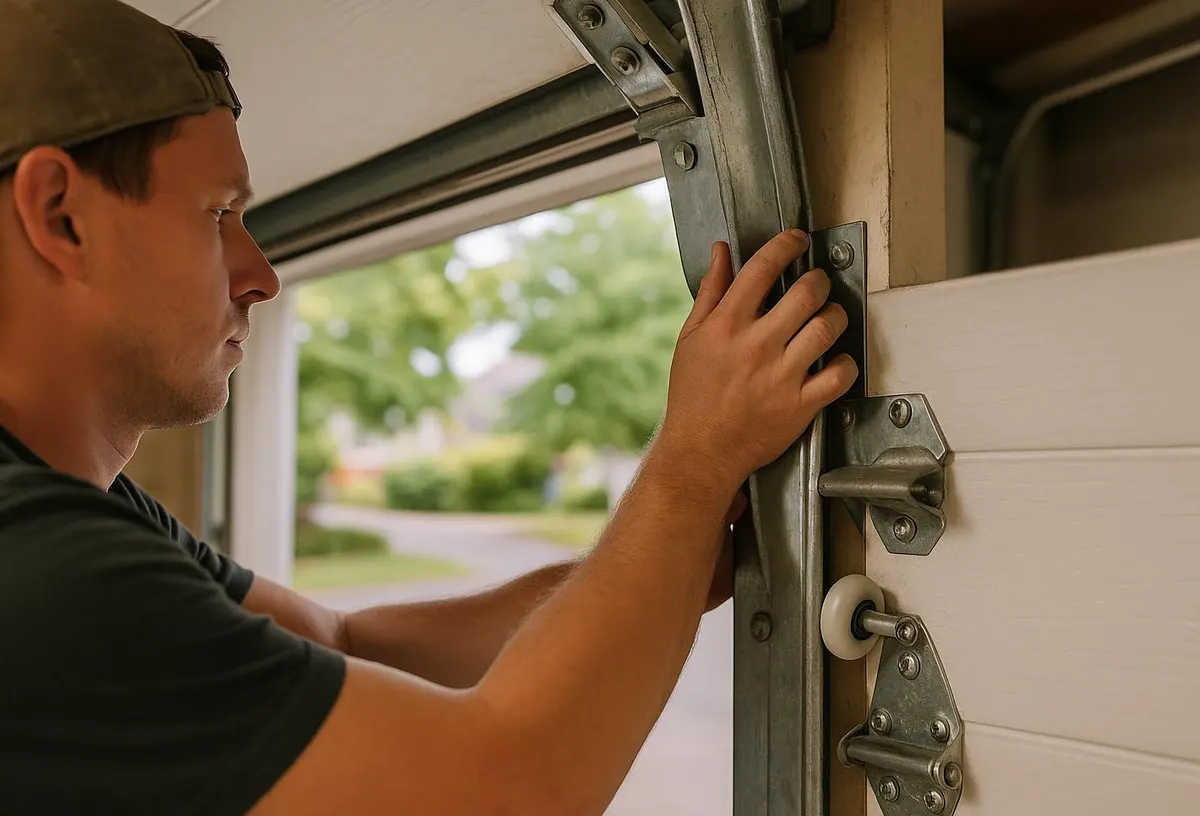
A garage door spring that fails without warning doesn't just leave you stuck — it can drop a 150+ pound door in a fraction of a second, snap a cable, dent a car, or injure anyone standing nearby. Put off a closer look this fall and you're betting that the spring holds through winter rain, temperature swings, and the extra cycles that come with shorter days and more time spent in and out of the garage. Most springs give off signs weeks or months before they go. Here's how to check yours.
Walk the Checklist in Your Own Garage
1. Look at the coils themselves
With the door closed, look at the torsion spring (the one mounted horizontally above the door) or the extension springs (the ones running along the upper tracks on either side). A gap stretched between coils, a coil that looks twisted out of line, or a section that looks visibly thinner than the rest means the metal is fatiguing. If you see a gap or separation, treat it as a near-term failure, not a someday problem.
2. Check for rust and pitting
Coastal salt air works on exposed spring steel even in a closed garage, and homes closer to the water see it faster. Light surface dust is normal; what matters is rust that's eaten into the coil surface, left pitting, or flaking. Rust weakens the metal from the inside out, so a spring can look mostly intact and still be close to snapping. Winter rain months are when this accelerates, since moisture gets tracked in and sits in the garage longer.
3. Do the manual balance test
Disconnect the opener by pulling the red release cord, then lift the door by hand to about waist height and let go. A properly balanced door with healthy springs stays put. If it drops on its own, springs forward with force, or feels noticeably heavier than it used to, the springs have lost tension and are compensating poorly — which also means your opener is working harder than it should.
4. Listen during normal operation
Run the door through a full cycle and listen. A loud bang or pop, a grinding sound as the spring turns, or a squeak that wasn't there a few months ago all point to metal stress or lack of lubrication. Dry-season dust can work into the coils and accelerate this friction, so a sudden increase in noise after a dusty stretch is worth checking.
5. Watch how the opener behaves
If the opener strains, runs longer than it used to, gets warm to the touch, or clicks without moving the door, it's often fighting a spring that's no longer doing its share of the lifting. This is one of the most overlooked signs because homeowners blame the opener first, when the spring is the actual cause.
6. Check for uneven or crooked movement
If the door tilts to one side as it opens or closes, especially with two extension springs, one side has likely weakened more than the other. This puts extra load on the working side and the cables, increasing the odds of a cable snap along with the spring.
7. Inspect the cables
Extension springs rely on safety cables running through their center; torsion systems use lift cables at the bottom corners of the door. Frayed strands, rust, or visible kinks mean the cable is close to failing too — and a cable failure under spring tension is just as dangerous as a spring failure.
8. Know the age
Most garage door springs are rated for a certain number of open-close cycles, which generally works out to somewhere in the 7 to 10 year range for an average household door. If you don't know when yours were last replaced and the house is older, age alone is a reason to have them checked before winter use picks up.
When to Call Santa Barbara Garage Door Service
If you've spotted gaps in the coils, rust that's more than surface-deep, a door that won't hold its balance, or an opener that's clearly straining, stop using the opener and call us before the spring finishes failing on its own schedule. Our Spring Replacement service swaps worn torsion or extension springs for correctly rated replacements and rebalances the door so the opener isn't doing extra work. If you're not sure whether what you're seeing is spring wear, worn rollers, or something else, our Garage Door Maintenance visits cover a full inspection of springs, cables, and hardware so small issues get caught before the rainy season adds more stress to the system.
If your garage door in Santa Barbara, Goleta, Montecito, or anywhere along the coast is showing any of these signs, give Santa Barbara Garage Door Service a call and we'll get it checked and fixed before it fails on you.