
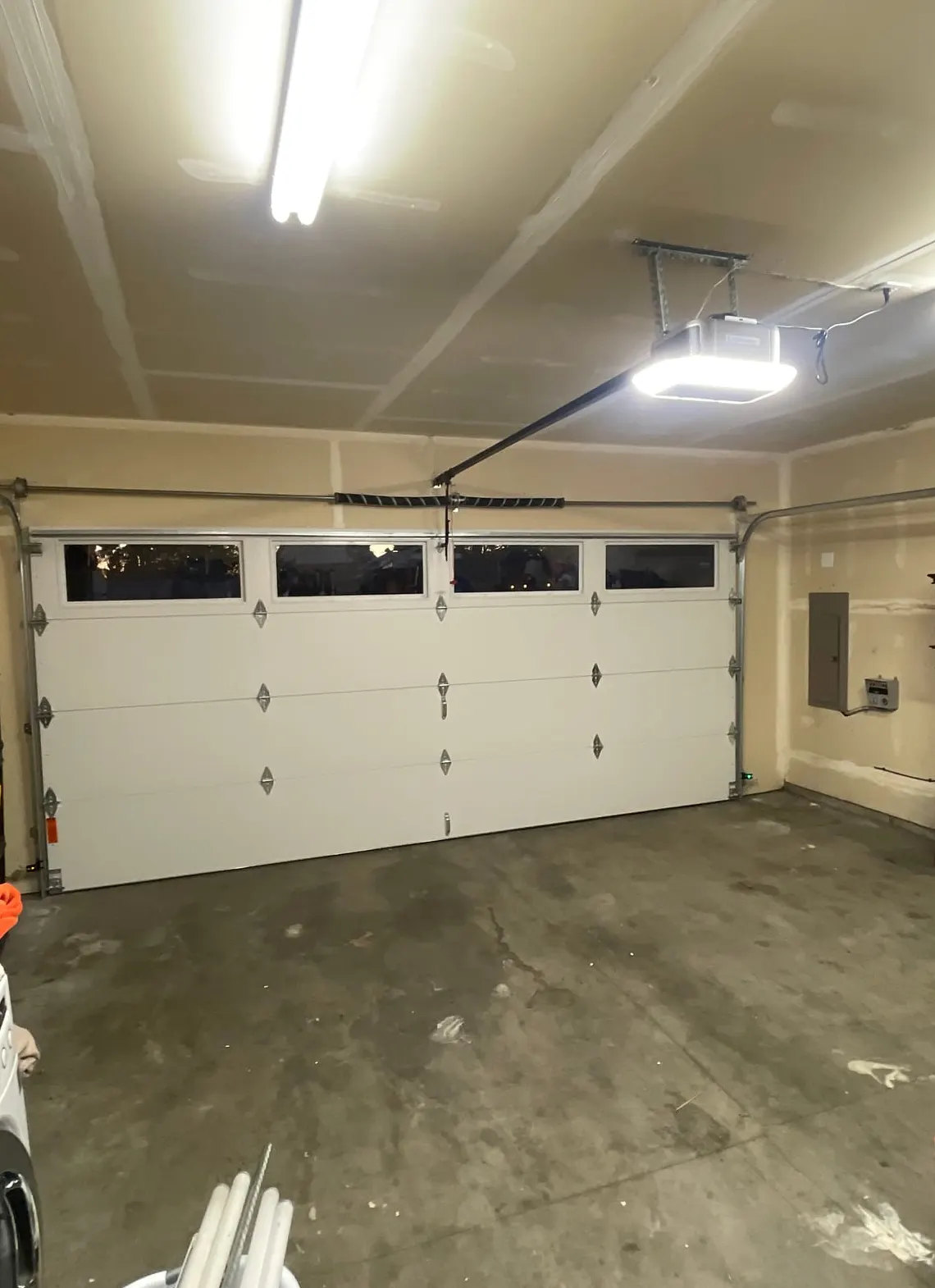
The cost of putting this off another season
Skip this conversation through another winter and you're not just delaying a decision — you're paying for it. A garage door that was never meant to seal a living space lets in rain at the bottom corners, lets out the heat you're paying for, and lets dust and wildfire smoke sneak through gaps around the panel edges during dry, windy stretches. If someone's using that room to work out, sleep, or build furniture, a leaky door means a cold, damp, or smoky room no matter how good the insulation on the walls is. And if the door's hardware was never adjusted for the extra weight of insulation or built-ins, you're looking at a spring that wears out faster or an opener straining every time it lifts.
The door doesn't know it's not a garage anymore
Here's the disconnect that usually starts the argument: one spouse treats the converted space like any other room — paint, flooring, maybe a mini-split for heat — while the garage door itself still thinks it's protecting a car. Torsion springs are calibrated to the weight of the original door. Add insulated panels, a second layer of drywall backing, or mount anything heavy to the inside of the door, and that balance is off. An opener that used to lift smoothly starts grinding, reversing, or struggling halfway up. That's not a coincidence — it's physics catching up to a home improvement project.
What actually changes when you convert the space
- Weight on the door. Insulated or solid-core replacement panels weigh more than a standard uninsulated door. That changes spring tension needs and can shorten opener lifespan if nothing is adjusted.
- Sealing becomes the whole job. In a garage, a little gap at the bottom doesn't matter much. In a gym or workshop, that same gap lets in winter rain, coastal damp, and dust. Weatherstripping and the bottom seal go from nice-to-have to essential.
- Condensation risk goes up. Seal a space tightly for insulation but don't address airflow, and salt air plus temperature swings between day and night can cause condensation on metal tracks and hardware — which means rust over time, especially this close to the coast.
- The opener's job changes too. If the space is now a workshop with power tools or a gym with weights, people are opening and closing that door more often, sometimes partway for ventilation. More cycles means more wear, and a lot of standard openers aren't built for that kind of daily use.
The decision that actually needs to be made
Most of the disagreement comes down to one unanswered question: is the door staying functional, or is it becoming a wall?
- Keep it as a real door. You still want the option to open it wide — for airflow, for moving equipment in and out, for resale down the road. In this case, the door needs proper insulation panels rated for the job, fresh weatherstripping, and a spring/opener check to handle the new weight and more frequent use.
- Seal it permanently. You're framing in a wall behind or instead of the door and don't plan to open it again. This is a bigger project, but it solves the sealing and insulation question once — no more chasing leaks at the base every rainy season.
- Hybrid approach. Keep the garage door operational but add a separate side door for daily access, so the overhead door only opens occasionally. This keeps resale flexibility while reducing wear from constant use.
Whichever route wins the argument, resale is worth a mention here. Appraisers and future buyers often expect a garage to function as a garage. A fully sealed, non-functional door can affect how the space gets valued later, even if it's a great home gym today. That's a conversation worth having before anyone starts cutting into drywall.
When to call Santa Barbara Garage Door Service
If you've already converted the space — or you're mid-argument about how to do it — this is where a second opinion earns its keep. We can check whether your current spring setup can handle the added weight of insulated panels, and recalibrate it through our Spring Replacement service if it can't. If the door still needs to open regularly for airflow or equipment access, our Garage Door Maintenance visit covers the weatherstripping, seals, and track inspection that keep rain, dust, and salt air out without guesswork. And if the conversation has shifted toward installing a different door entirely — something built for insulation rather than vehicle storage — we can walk you through options as part of a full Garage Door Installation.
Either way, the door shouldn't be an afterthought in a room you're actually going to use. Give Santa Barbara Garage Door Service a call and we'll help you settle it — with a door that actually matches what the space has become.